How does William AI answering work for towing companies in Charlotte, NC?
William plugs into your existing phone numbers and answers towing calls for your Charlotte operation on the first ring. It talks with drivers like a dispatcher would, collects location, vehicle, issue, and destination, then applies your rules on pricing, zones, and truck types. Qualified jobs get pushed to you by text, email, or into your dispatch tools so your team only steps in to make dispatch decisions, not repeat basic questions all day.
Can William handle highway locations and exits around Charlotte?
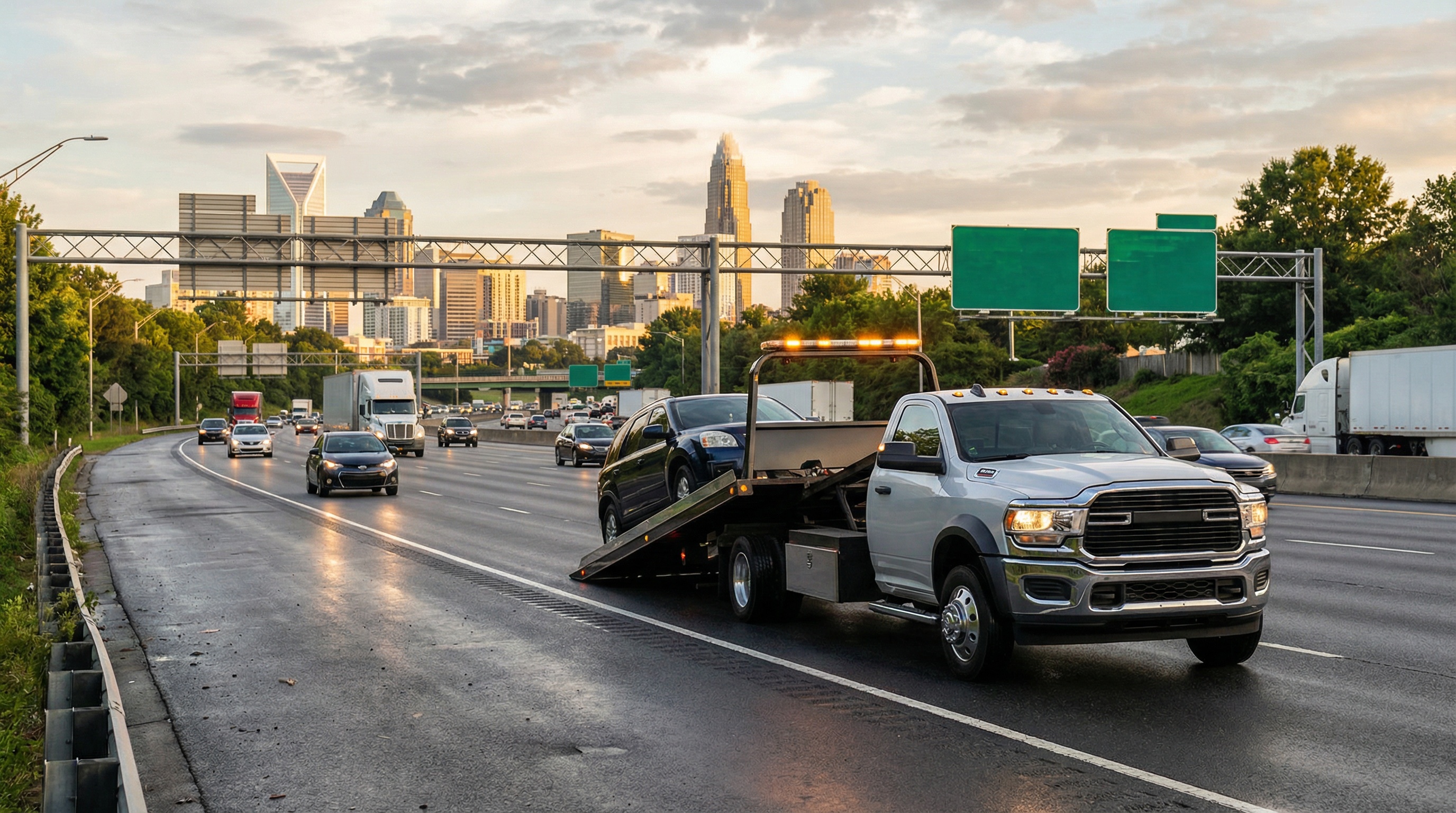
Yes. William is built to handle real-world directions on the I-77 corridor, I-85, the I-485 loop, Independence Boulevard, Wilkinson Boulevard, and more. Callers can say things like right shoulder after Exit 18 toward University City or by the I-77 and I-277 split near Uptown, and William captures those details into the job summary for your driver.
Will William really help with after-hours and weekend towing calls?
That is where William usually pays for itself first. When your office is closed and your on-call person is driving or asleep, William still answers every call, explains your services, gathers the job info, and either books the tow or flags it for you. Late-night bar traffic, weekend Lake Norman trips, and holiday interstate breakdowns stop slipping to the next tower that actually picks up.
Can William qualify towing calls so my trucks do not chase bad jobs?
You tell William your service area around Charlotte, what trucks you run, and which jobs you want to avoid. William uses that to sort calls filtering out far-out jobs, obvious low-value time wasters, or vehicle types you do not handle, while fast-tracking good accident, property manager, body shop, and highway breakdown calls. Your drivers spend more time on profitable tows and less time saying no at the roadside.
Does William record and document towing calls for my Charlotte operation?
Yes. Every call through William is recorded, transcribed, and summarized with who called, where they are, what happened, what was quoted, and where the vehicle is going. When there is a dispute with a driver, customer, or property manager, you can pull the call and see exactly what was said instead of digging through handwritten notes or guessing from memory.