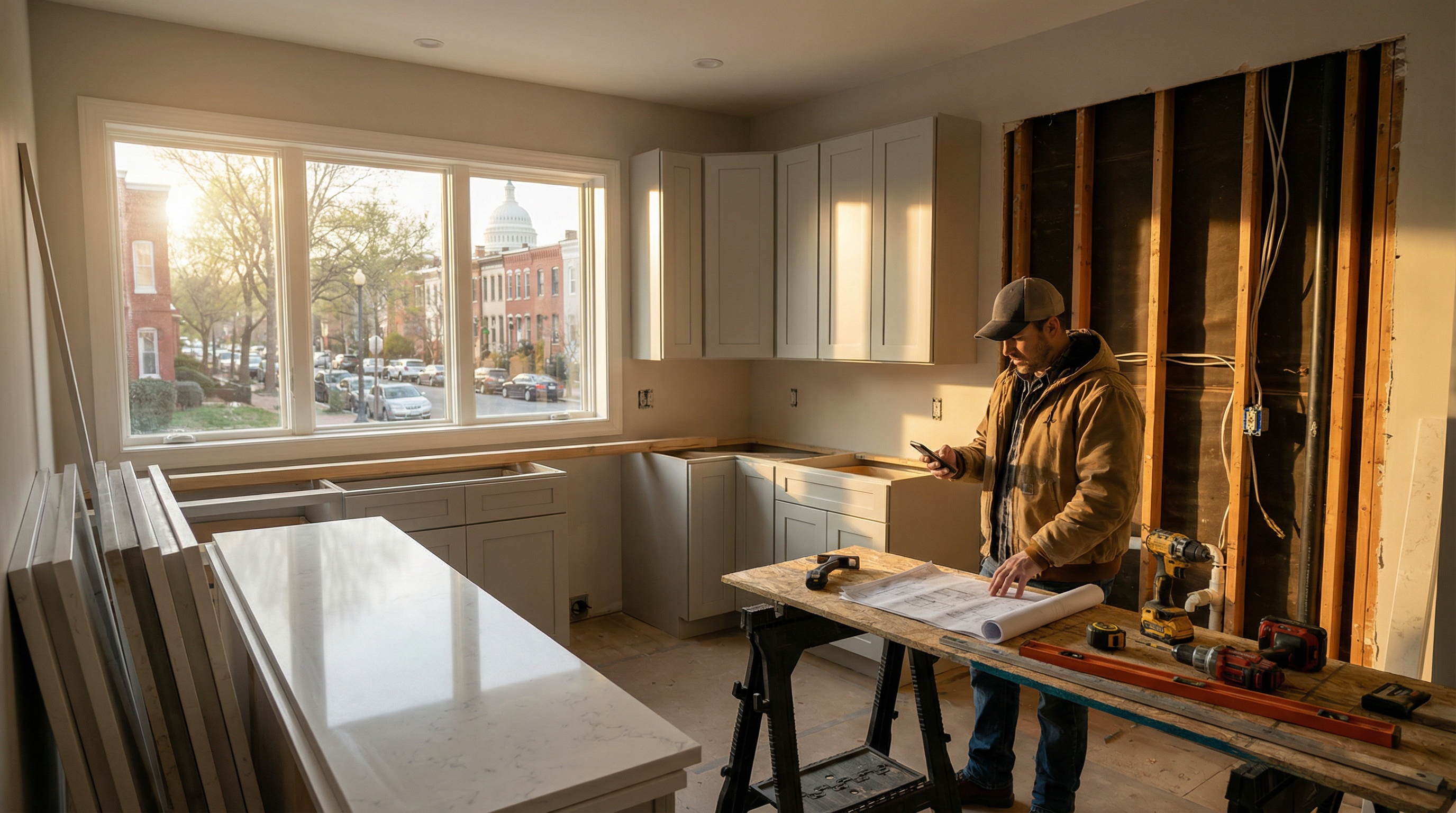
How does William's AI answering work for remodeling companies in Washington, DC?
William sits on your existing phone line as an AI answering system. When someone calls about a remodel, it picks up, speaks naturally, asks remodeling-specific questions, and captures scope, budget, address, building type, and timing. Then it routes and alerts your team based on rules you set and stores a full recording, transcript, and summary for every call.
Can William handle after-hours and weekend remodeling calls in Washington, DC?
Yes. Many DC professionals finally call about their kitchen or bath after work or on weekends, when your office is closed. William answers those calls, collects full project details, and flags strong leads so you can follow up first thing instead of finding an empty voicemail box on Monday.
Will William actually understand DC rowhouses, condos, and historic remodels?
William is configured around how you work in Washington, DC. Intake flows can include condo or co-op rules, historic considerations, parking and alley access, building managers, and HOA or board approvals, so calls do not feel generic. Complex structural or design questions get documented and passed to you, instead of the AI trying to guess.
Can William pre-qualify remodeling leads in Washington, DC and route only good jobs to me?
Yes. William asks about project type, location, budget range, decision-makers, and timing on every call. You decide what a good lead looks like, for example a full kitchen in NW DC over a certain budget or a basement finish inside the Beltway, and William flags and routes those directly to the owner or estimator while tagging price shoppers or bad fits separately.
How accurate and secure are William's call notes for my DC remodeling projects?
Every call is recorded, transcribed, and summarized, so details like unit numbers, gate codes, and preferred finishes do not get lost on a scratch pad. Your data is stored in secure cloud infrastructure, and your team can search past calls by client, address, or job type. In a city where the median home is worth around $669k, this level of documentation helps protect both your clients and your margins.